
The Kiss is for the Whole World. Tammam Azzam and his very Syria.
- 29 сент. 2015 г.
- 4 мин. чтения
Last week in Milan a very dear friend of mine introduced me to an extraordinary person, the one you find in movies, a Mel Gibson in his 1997 Conspiracy Theory type of guy. The Italian spoke perfect English with an odd Texan accent, we had a long conversation and suddenly everything seemed like a cover-up. We discussed the recent economic crisis, a refugee catastrophe in Europe, an endless conflict in Syria, the rise of jihadists and the Islamic state, the opening up of the Iran and the regime, the Pope and the Vatican, Russia and the US, the theory of 7 years hidden in all holy books, numerology and religion. My new mysterious friend referred to an era we live in as the period of turbulence, within the state of which, the society will finally flip, rise again from the dust, after tragically falling into the very darkness.
Speaking of darkness and destruction ... Tammam Azzam, a Syrian-born artist went into exile, several months into the violent uprising in Syria, leaving Damascus for Dubai with his wife and two children escaping conscription, and being very well aware of what can happen to people who openly criticize the regime. Consequently, the artist, who has been a prolific painter, lost his studio, and had to turn to digital media and street art, the synthesis of which turned out to be a powerful tool for protest that is difficult to suppress. In 2013, Azzam digitally superimposed Gustav Klimt’s The Kiss on a photograph of a bullet-ridden wall in Syria, entitling it Freedom Graffiti.
The Kiss by Gustav Klimt that was painted in Vienna in 1907-8, and takes its text from a line in the choral performance of Schiller's Ode to Joy in Beethoven's Ninth Symphony: "The kiss is for the whole world", not only celebrates a couple in love, but it visualizes the idea of global human love, the union of all men and women. Using that universal and passionate image against a war-ravaged building, Azzam is trying to touch international hearts that are ignoring the violence being committed in his country. "How many gassed bodies of children do you need? Why is Syria a plaything? Why is it simply an entertainment?"
In his series entitled "Syrian Museum", where Azzam incorporates other masterpieces set against images of Syria in ruins, the artist draws a parallel between the humanity's greatest achievements and the destruction it is capable of inflicting. The use of masterpieces in this series also demonstrates that Syria has world-class museums, and the regime is presently destroying its own cultural heritage. After witnessing the merciless death of his fellow countrymen, Azzam said he was not sure that art made any sense anymore.
Perhaps, Tammam Azzam is right, and in the light of the current events, masterpieces and museums have become worthless. But the Freedom Graffiti that went viral when it was first created, epitomizes a new function of an iconic artwork, its power can be used to raise awareness of something so terrifying, the armed conflicts, humanitarian crises and the iniquitous pain.
I didn't realize how it suddenly darkened and it rained. The voice of the conspiracy guy never stopped. Call it as you want, he told me, a universal collapse, the start of World War III or the Mayan prophesies. If you want to survive this madness, quit your job if you hate it, he unexpectedly stated, spend more time with your family, start meditating and practice yoga, listen to your inner self and not the media, don't let yourself be manipulated and discoursed, do not follow the chaos, love people, help people, be patient and wholeheartedly kind. Diesen Kuss der ganzen Welt.
FP

The actual Kiss by Gustav Klimt that was painted in Vienna in 1907-8, takes its text from a line in the moving choral performance of Schiller's Ode to Joy in Beethoven's Ninth Symphony: "The kiss is for the whole world". The work not only celebrates the profound love between a man and a woman, but visualizes the idea of universal human love.

Tammam Azam's version of Spanish artist Francisco Goya’s The Third of May 1808 – a painting illustrating the execution of Spanish resistance fighters by Napoleon’s troops during the Peninsula War. Azzam says the work is about showing that “Syria is living the Third of May every day and no one stops it.”

Tammam Azam's version of Henri Matisse's Dance

Tammam Azam's version of Van Gogh's The Starry Night
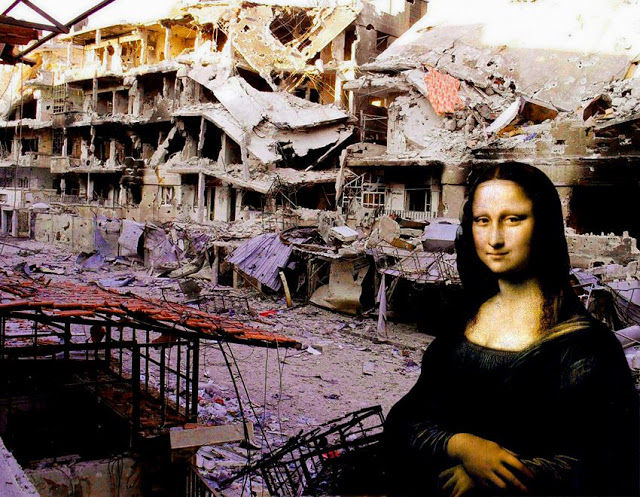
Tammam Azam's version of Da Vinci's Mona Lisa

Tammam Azam's version of Munch's Scream

In his Bon Voyage series, brightly coloured bunches of balloons carry war-torn buildings lifted straight from the streets of Damascus high above some of the world’s best-known political headquarters and landmarks. Here, a whirlpool in London’s the River Thames threatens to swallow up the Houses of Parliament.


The black and white photograph shows a one dollar bill digitally layered over an actual picture of a bombed out and deteriorated building in Syria. The artwork is titled, "USA."

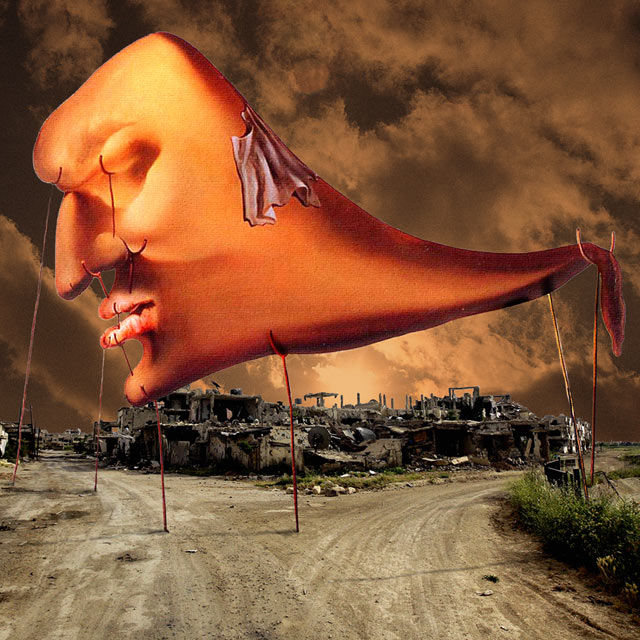


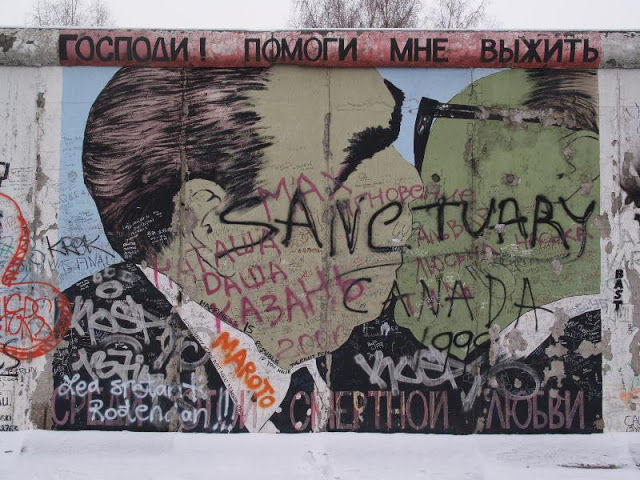
The powerful and hilarious Berlin Wall graffiti picture that showed a fraternal kiss between Communist leaders Leonid Brezhnev and Erick Honecker. Another type of graffiti "Kiss" that became a world-famous work of dissenting art.

Tammam Azam
SYRIA TODAY


Комментарии